 N-Ways
 Codes
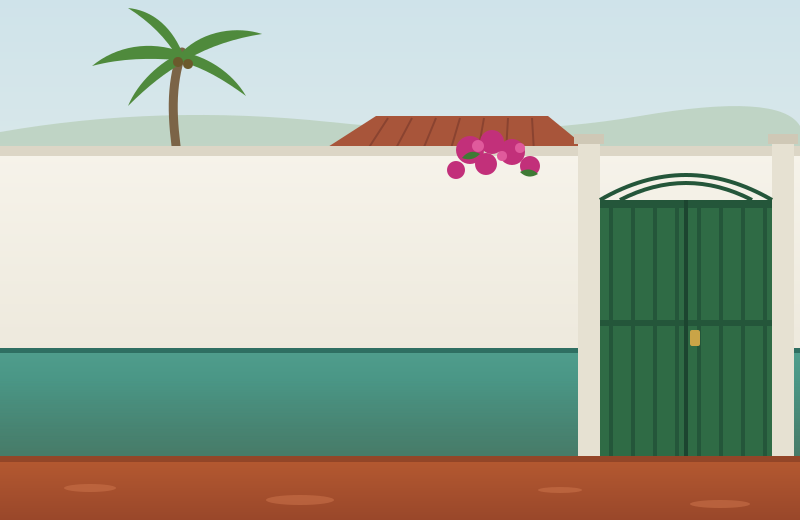
In Gabon a delivery often ends with a phone call: “After the PK8 roundabout, the green gate behind the bakery.” A post-office box says nothing about where you live. Every compound in the country, every concession, villa and house, now has an N-Ways code: 665,089 of them, from Libreville to Franceville and from Oyem to Tchibanga.
What a code is
A code is the name of your quarter or village and a short number, said in pairs like a phone number. Louis 12 01, a compound in Libreville, is said “Louis, twelve, zero one”. Other real codes: Mont-Bouët 19 57 by the market, Sainte-Marie 10 11 by the cathedral, St-Hilaire 15 33 in Franceville, Bitam 26 24 by Bitam’s market. The number has three digits in small places, like Abongo 181 by the Albert Schweitzer Hospital in Lambaréné, four in most and five in the bigger ones: Port-Gentil 12 181. It never has more than five. The name in the code is never longer than 12 characters and two words, and the full name still works when typed.
The code belongs to the whole compound and leads to its gate, not to the middle of a roof. A compound with several houses, a kitchen and rooms for rent has one code.
On a named street, the official address comes first
Libreville has been naming its streets and numbering its doors since 2012. Where the commune gives an address, it stays the official address, written as the commune writes it, and N-Ways shows it first: the street today, like “Avenue Joseph Deemin”, the door number as soon as it is known. The N-Ways code sits beside it, to say on the phone and to tell apart the households of a compound that share one gate.
One code, one place, in the whole country
Many names repeat: 18 places are called Mandji and 11 Aléné. So every place with the same name shares one national range of numbers, one block each. Mandji 10 20 and Mandji 39 50 are in different départements, and neither needs its town after it. Spellings fold together too: Mont-Bouët and Mont Bouet, or Nzeng-Ayong and Nzeng Ayong, are one name.
A landmark is never the name: “Cité Damas” is Damas, “Mongo Milando” is Milando. On a plate, a parcel or a form a code is written simply Louis 12 01. There is nothing else to remember.
How to get yours
- Open N-Ways at home and tap Get my code. The app finds the compound you are in and shows its code.
- Not at home? Find your compound on the map and tap it, or drop a pin on it.
- Share it in one tap, on WhatsApp or by text. Paint it on the gate if you like.
Every code starts provisional and becomes confirmed when the people who live there agree in the app that it is right. A house too new to be on the map gets a code on the spot. Codes never change and are never given to another home.
A code for any spot
Every spot in Gabon also has a spot code on a ten-metre grid, which works offline: GA-1LV E0794 N0757 for Louis 12 01. It serves a stall at Mont-Bouët, a landing stage on the Ogooué or a place with no house at all.
What a code is not
- Not a land title. It proves neither ownership nor the right to occupy a plot, and replaces neither the titre foncier nor any cadastral plan.
- Not a post-office box or a postcode. Your BP stays what it is for your mail.
- Not about people. A code describes a place. No names of residents are stored with it.
Open for developers
The model, the engine and the code areas are open on GitHub. Couriers, banks, shops and public services can decode codes in their own systems, offline if they need to. The research paper explains every rule, with the mathematics behind it.