 N-Ways
 Codes
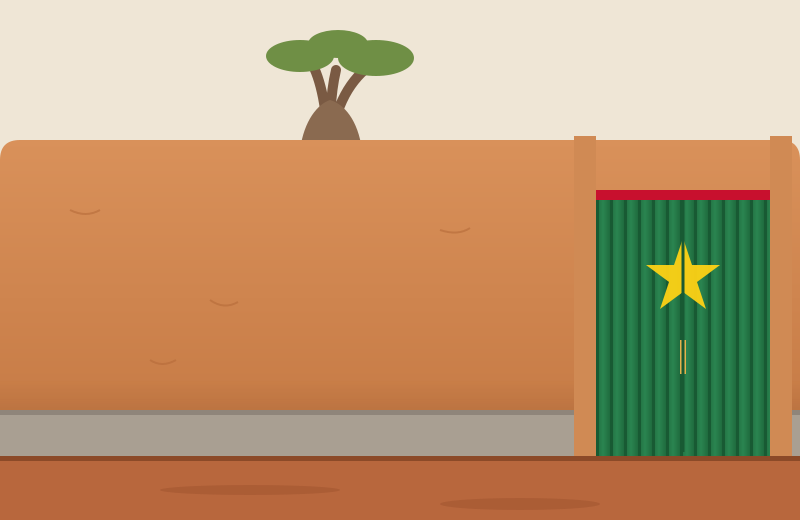
In Burkina Faso a delivery often ends with a phone call: “After the water tower, the green gate by the boutique.” From 20 October 2026, every compound in the country, every cour, villa and house, has an N-Ways code: 8,421,943 of them, from Ouagadougou to Bobo-Dioulasso and from Dori to Gaoua.
What a code is
A code is the name of your quarter or village and a short number, said in pairs like a phone number. Koulouba 17 76, a compound by Ouagadougou’s airport, is said “Koulouba, seventeen, seventy-six”. Other real codes: Wayalguin 13 21 by the Gare de l’Est, Caisse 13 63 near Ouaga 2000, Koudougou 11 485, Kaya 34 752, Dori 14 311. The number has three digits in small villages, four in most places and five in the bigger ones, said as a pair and a hundred: Bobo 26 206 by the Grand Marché. It never has more than five. The name in the code is never longer than 12 characters and two words, and the full name still works when typed.
The code belongs to the whole compound and leads to its gate, not to the middle of a roof. A cour with several houses, a kitchen, a granary and rooms for rent has one code.
On a coded street, the official address comes first
Ouagadougou and Bobo-Dioulasso code their streets, like “Rue 15.123”, and the communes are numbering doors again. Where the commune gives an address, it stays the official address, written as the commune writes it, and N-Ways shows it first: the street today, the door number as soon as it is known. The N-Ways code sits beside it, to say on the phone and to tell apart the households of a cour that share one gate.
One code, one place, in the whole country
Many names repeat: 74 places are called Natenga, 43 Douré and 38 Tanghin. So every place with the same name shares one national range of numbers, one block each. Natenga 10 016 is in Pabré and Natenga 10 286 in Dapélogo, and neither needs its commune after it. Spellings fold together too: Tanghin, Tanguin and Tangin, or Ouatinoma and Watinoma, are one name.
Townspeople say “secteur 15”, but no map of the secteurs is public, so codes use the quarter instead. On a plate, a parcel or a form a code is written simply Koulouba 17 76. There is nothing else to remember.
How to get yours
- Open N-Ways at home and tap Get my code. The app finds the compound you are in and shows its code.
- Not at home? Find your compound on the map and tap it, or drop a pin on it.
- Share it in one tap, on WhatsApp or by text. Paint it on the gate if you like.
Every code starts provisional and becomes confirmed when the people who live there agree in the app that it is right. A house too new to be on the map gets a code on the spot. Codes never change and are never given to another home.
A code for any spot
Every spot in Burkina Faso also has a spot code on a ten-metre grid, which works offline: BF-10000 E1885 N1262 for Koulouba 17 76. It serves a stall at Rood-Woko, a field in Guiriko or a place with no house at all.
What a code is not
- Not a land title. It proves neither ownership nor the right to occupy a plot, and replaces neither the PUH, the attestation d’attribution nor the titre foncier.
- Not a postcode. La Poste’s postcode stays what it is; every code’s machine form starts with it.
- Not about people. A code describes a place. No names of residents are stored with it.
Open for developers
The model, the engine and the code areas are open on GitHub. Couriers, banks, shops and public services can decode codes in their own systems, offline if they need to. The research paper explains every rule, with the mathematics behind it.